
%20(3840%20x%201800%20px)%20(5).png)
Strong Teams,
Better
Outcomes


BUILDING
ALLIANCES
TRAINING & RESOURCES
COMMUNITY
IMPACT
LASTING
HOPE
Building connected
communities
Training, resources,
and best practices
Changing lives today
for a better tomorrow
For children, families
and communities
What is an MDT?
Children and families are best served when professionals work together, not in silos.
A multidisciplinary team (MDT) brings professionals from different fields together around one shared goal: protecting children. MDTs often includes law enforcement, child protective services, prosecutors, medical providers, prevention, educators, among others, working as a coordinated unit rather than separately.
When these professionals share information and make decisions together, children spend less time being passed between systems. Families receive a more consistent response. And outcomes improve. An MDT is not a new layer of process. It is a more collaborative way to use the expertise already in your community.


SUPPORTING MDTs
Strengthening multidisciplinary teams through ongoing support, resources and partnerships.
NADEC helps multidisciplinary teams strengthen communication, coordination and shared decision-making so every child and family gets the coordinated support they need.
Our Ecosystem helps communities move from learning about drug endangered children to building lasting multidisciplinary partnerships and changing system responses that serve to strengthen families and transform entire communities.
Every community begins in a different place. The NADEC Ecosystem brings together the tools, partnerships, and support needed to create lasting change - wherever your journey starts.
The DEC Approach
All the professionals out there who see and help drug endangered children are our heroes. But no single professional ever gets to see the full picture (see example). This is a problem when the ultimate goal is to identify at-risk children as quickly as possible, in order to reduce Adverse Child Experiences (ACEs).
To address the challenge of helping drug endangered children, NADEC developed the DEC Approach, a unique multidisciplinary strategy aimed at transforming the lives of these children. This approach prioritizes a common vision, collaboration across disciplines, and changes in practices and policies to improve outcomes for drug endangered children.

Example:
-
A deputy sees family members involved in the justice system.
-
A caseworker sees the home environment and family functioning.
-
A school teacher sees the child's behavior every day.
Working alone, each holds a piece of the picture - but not the whole story.
It is a community-based, multidisciplinary model that trains practitioners on how to build community-based partnerships that bring together expertise, resources, and responsibilities from multiple fields. These partnerships enable local, regional, state and tribal DEC alliances to provide support to children, families and communities.
Journey of Helping a Drug Endangered Child
AWARENESS
Training is needed to identify children impacted by substance use. It helps people understand who drug endangered children are, the prevalence, and the long-term effects if there isn’t intervention.
PLANNING
The realization there is an issue and the acknowledgement of needing to be prepared when identification comes.
RESPONSE
Responding to a child in need with a research-backed approach. This could be a teacher approaching a child in the classroom, law enforcement getting dispatched to a call, et cetera.
IDENTIFICATION
& ASSESSMENT
Putting training into practice; seeing the signs and asking the correct questions that lead to early identification. This will also include working across disciplines to put the pieces of the puzzle together and identify next steps.
INTERVENTION
A coordinated response with effective hand-off to appropriate services is activated, involving law enforcement, child protective services and emergency medical care. This may include removing the child from the unsafe environment and implementing safety measures or emergency foster care.
How NADEC Supports MDTs

Coaching

Technical Assistance

Peer Networking

Tools & Resources

Ongoing Support

Why the Ecosystem Works
We Connect
Partnerships that align professionals around a common vision.
We Educate
Training that builds knowledge and confidence.
We Sustain
Ongoing support that keeps communities moving foward.
The NADEC ecosystem means Better Outcomes for children, families and communities!

Children Are Safer

Families Receive Support
Professional Collaboration

Stronger Systems

Healthier, More Resilient Communities
The Journey Isn't Always Linear
Some begin by raising awareness. Others already have strong multidisciplinary teams and need technical assistance. Some want to develop an alliance. Others are ready to strengthen existing systems with training.
Wherever you begin, NADEC meets you there and helps you build something that lasts!


Stronger Communities Start Here
Whether your community is taking its first steps or building on years of progress, NADEC can help you create a coordinated response that protects children, strengthens families,
and builds lasting change for communities.
Where to Start?

NADEC Ecosystem graphic

Group of adults collaborating in front of a drug endangered child poster.

Girl walking along the street alone.
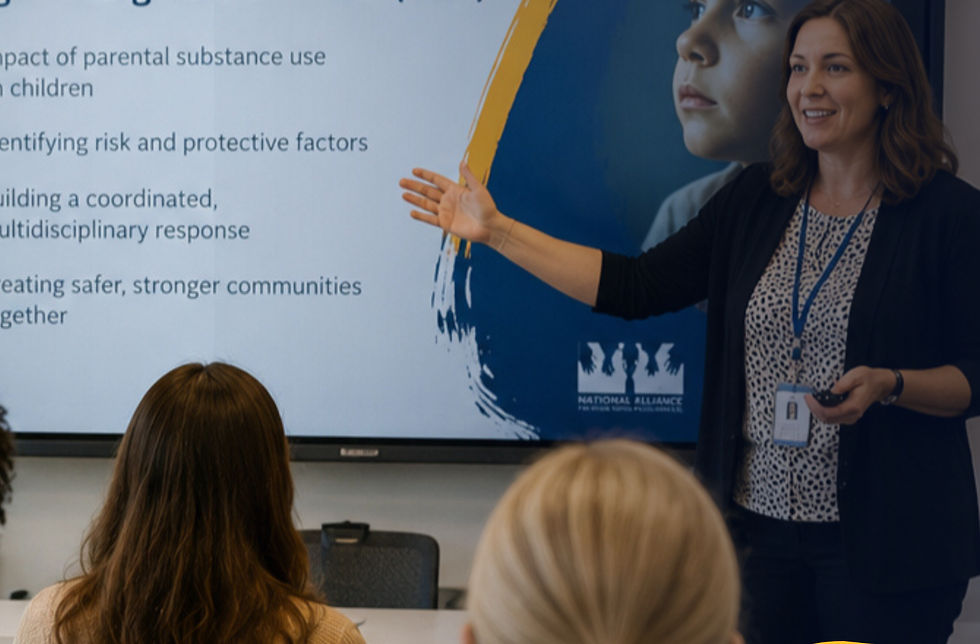
Group of multidisciplinary professionals getting taught by a DEC Trainer.

Community group picture with both children and professionals.